

My radio silence on the blog front is because I’ve been working around the clock this year on research and development for an exciting new theatre magic show. The project is based on my stage magician double-act Norvil & Josephine. All being well, we hope to get an England tour off the ground soon. The show is called Rabbits Out of the Hat and it blends magic and acrobatics with musical theatre style storytelling. I’ve been working obsessively on it with an amazing team. But our friends don’t know much yet about what we’ve been working on. So last week I sat down with my show partner Desireé Kongerød to give you a sneak peak at what’s on the way.
What was the idea behind this theatre magic show?
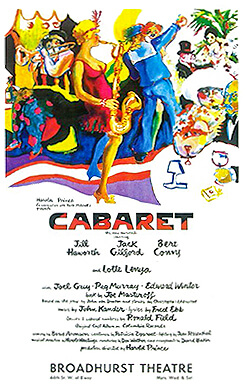
Christopher: I’ve always loved magic that tells a story. I like how it engages the imagination so much more than a magician simply displaying their ability to do something impossible. It takes you somewhere. For me, adding a story to circus feats has much the same impact. I trained as an actor in university. Then as a classical singer after that, so it’s no surprise where my bias lies! I’ve also always loved the theatre musical and Bob Fosse film Cabaret. I think it’s so clever how it uses a narrative that weaves through a series of cabaret numbers. It’s been my dream for years now to make a show that uses a similar musical storytelling device, but for us it would be magic, songs and circus acts that the story weaves together. We wanted to use that as the basis for a show that is equally appealing to young people as it is for adults while delivering a meaningful message of ‘be yourself’.
Most magicians don’t do much with stories, do they?
Christopher: Well I guess you could say we are a couple of settlers in a largely unexplored territory. Before my theatre-going days, in the 1970’s the American magic sensation Doug Henning had a musical magic show on Broadway for four years called The Magic Show. In Henning’s footsteps, David Copperfield has also used storytelling in his TV specials and live shows. This includes his Chicago theatre debut in The Magic Man – also in the 70’s. That story-based magic show helped put him on the map for many people. One story magic show I did see much more recently was In and Of Itself by magician Derek Del Gaudio and directed by Frank Oz. It was a one man theatre show that ran off Broadway. Also one of my mentors, Eugene Burger, was a big proponent of using stories to elevate the impact of his magic. As for the UK, the biggest example here must be Darren Brown who has used stories to make his magic powerful in his own ways.
I loved reading about Doug Henning’s The Magic Show in John Harrison’s book “Spellbound.” Dale Soules, a collaborator with Henning, said about their show, “Sure, audiences had already seen a woman get cut in half, but they never got to know her well enough to care whether she was ever put back together. The Magic Show changed that.” That quote really resonates with me and that’s exactly what we’re aiming to do in our theatre magic show Rabbits Out of the Hat.

(Photo: Martha Swope)
Josephine has an unusually prominent speaking role as a magician’s assistant. Tell us more.
Desireé: We wanted to see how we could make the assistant as strong as the magician on stage. The goal was to break the cliché of the silent supportive woman. Our research and development on this topic began in 2021 for a show called The Top Hat Act with director Abigail Dooley and comedy writer Susan Earl. We looked at ways of making Josephine stronger. Up to this point she had been a traditional (mostly silent) assistant. So first we tried to strengthen her by changing her physicality and actions on stage. But after trying different ways of doing this, we realised that to balance the bias of Norvil being the man, the magician and the one who speaks, that Josephine also needed to speak. As a woman who was a silent assistant, it was just not possible to make people see her strength and equal status through physicality alone. It was time for audiences to hear Josephine. Of course, as a physical person (a dancer and circus performer) the challenge of using my voice on stage for the first time has been exciting and inspiring for me.

Era 50:50 is an organisation in the UK that champions women and men having equal representation on stage and screen. They made an analysis of film dialogue across 2,000 modern screenplays. It showed men between the ages of 42-65 had 54 million words to say. In contrast, women of the same age bracket had only 11 million words written for them.
I have been a physical performer since 1993. I am aware of the question that’s almost built-in to my profession: “when are you going to retire?” But it’s so important to see women of all ages on the stage and screen. It shapes people’s perception of women. Our show doesn’t spell all of this out, but by seeing the story of Norvil & Josephine in a theatre magic show context, it will make an example of women’s voices being heard.
So this all must relate to Josephine being a suffragettE?
Desireé: It is extraordinary to think that women only got the right to vote in 1918. And that was only for women over age 30. Finally, in 1928, all women over 21 were allowed. It is easy to think of it as a long time ago. But it seems to me that women’s voices are something we have to actively protect. The suffragettes fought hard to impress the idea of equal rights for all.
One of our routines in Rabbits Out of the Hat is Josephine being cut in half. This was invented in the early 20th century when women were getting more rights in society. Maybe it is stretching it, but I do wonder if that was part of the excitement of the illusion. In 1921, the illusion’s inventor PT Selbit invited the suffragette Christabel Pankhurst (the daughter of Emmeline Pankhurst, the founder of the Woman’s Social and Political Union) to be part of his act and sawn in two. This was after Christabel had put an ad in the newspaper searching for non-political work. She turned down the job.
Christopher: So you have these forces churning through society at the time we set the play which is 1905. That is the same year in fact that a group of notable magicians founded The Magic Circle. We tried to reflect these backstories in the show. Music hall and vaudeville entertainment were the mainstream for society at the time. So it seemed impossible to write a play about this period without working these societal issues into the fabric of the piece. It sounds very academic to talk about it all. But in the show, don’t forget we’re just a couple of clowns and it’s all done in a fun way.
Related articles:
Making The Top Hat Act
Launching my Online Magic Show
What I Learned Studying with Eugene Burger
And what is Norvil’s story?
Christopher: Norvil doesn’t feel at home in his own skin. He’s playing the role of the magician in dressed in black that tradition says he should play. But he’d rather be something more special than that. Norvil’s story is about anyone really who yearns to get out of their own way and be something out of the ordinary. He takes inspiration from his big sister Josephine. Her strength and non-conformist suffragette rah rah encourages him. And while that stuff also annoys Norvil, it’s more of an annoyance with himself and his own expectations to follow the rules and burden of tradition. I think Norvil’s journey is inspiring for both young people and adults alike who want to either tip toe or full-out tap dance to the beat of their own drum. In other words, just be yourself!

What about the magic?
Christopher: Good question! If the story is the backbone of the show, the magic is the flesh. Obviously a theatre magic show set in 1905 will have magic that’s familiar to many audiences. But you could describe the magic in this show as ‘old school, reimagined.’ We’ve been performing together since 2006. However the story had to drive all the magic in this show. So we often started from scratch with routines we thought we knew very well. While audiences may have seen some of the props before, we think it’s safe to say they’ve never seen them performed this way.
For example with the big rings that melt together, we had to figure out how to balance the moments of skill and beauty of the magic with pure clowning mayhem. Or with the broom balancing routine where the assistant usually levitates on a broom while asleep; in our show it is a soap boxy show piece for a fully active assistant who is calling the shots. Josephine is also the first in the world to contort while she levitates, nonetheless. In the show we also feature two interpretations of routines made famous by Houdini. These are a thrilling needle swallowing act and a flashy escape from a trunk. And I’m also proud to report that we may have made magic history because this show has only one card trick. (But that’s with tarot cards, so I’m not even sure if that counts.)

I heard some of the development for this show was over Zoom?
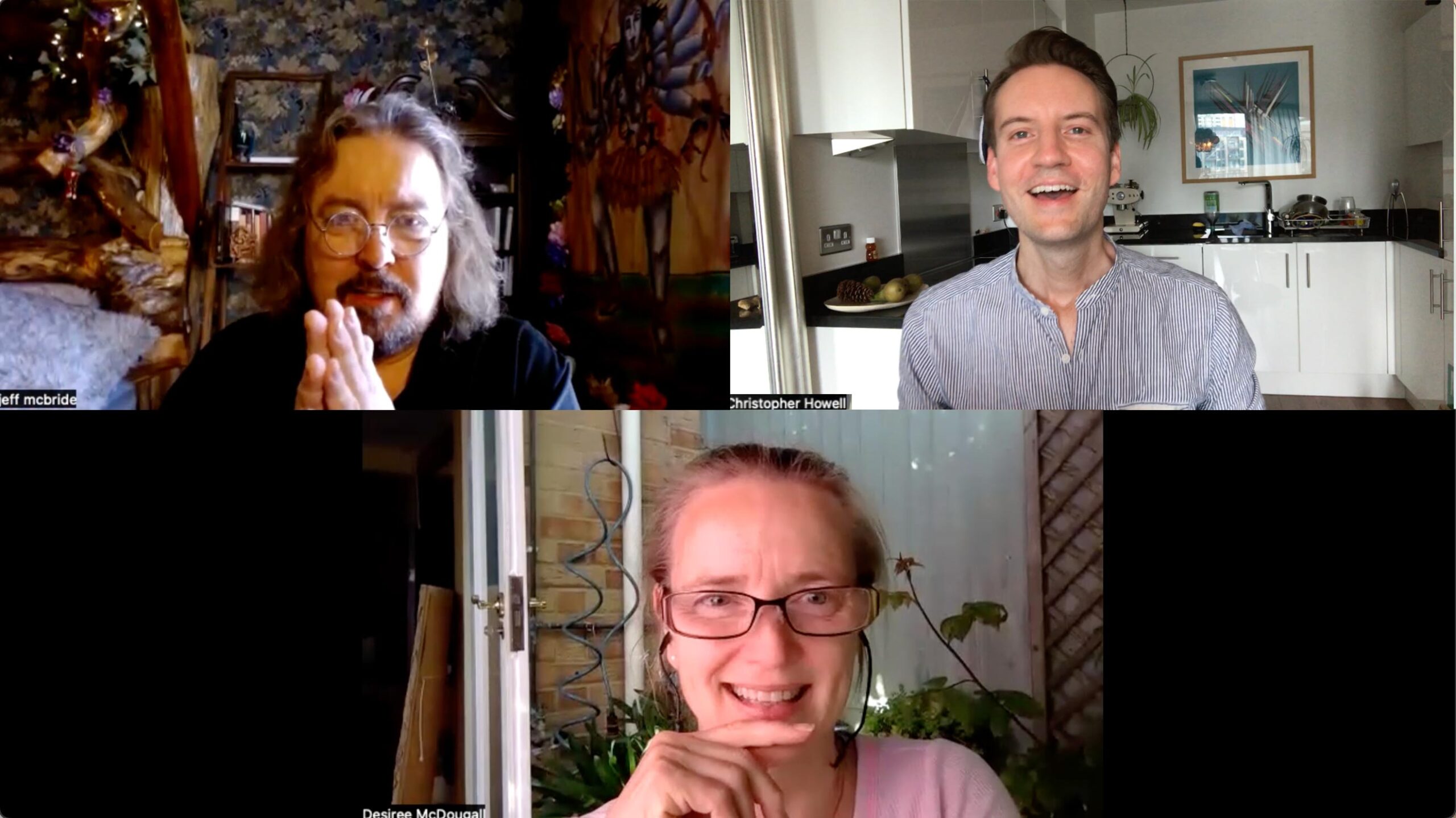
Christopher: Yes. The pandemic forced everyone to explore new ways to work and of course Zoom was one of them that has lasted. Las Vegas Grand Master of Magic Jeff McBride was one of three collaborators we worked with over Zoom. As well as our composer Micah Young working out of New York City. And our clowning and physical theatre director Ira Seidenstein based in Brisbane. We were not completely sure how productive Zoom developments would be. But we thought if we know the perfect people for the project yet can’t afford to fly them in, why not try to work with them long-distance over a longer time? Of course there are moments where we thought ‘this would be so much easier if we were in the same room’. But most of the time that wasn’t even a thought and overall how well the Zoom rehearsal method worked with some of our team really surprised us. To spread out development time with key creatives really helped because there’s so much technical prop and costume work that has to race to keep up with every decision that’s made in a rehearsal.
I see Arts Council England supported this show’s development…
Desireé: I am incredibly grateful to the Arts Council for supporting us to focus in on this single story over the past several years. Our first development started in May 2021 and we have lived Norvil & Josephine since. The first phase was to create a Norvil & Josephine street show called The Top Hat Act in 2021. It took place on a giant top hat stage. Then we had an R&D to transfer Norvil & Josephine’s back stories from The Top Hat Act into a theatre show. It has been intense and exciting as well as occasionally exhausting.
This all has made me ponder the value of slow art, of allowing a story to find itself. We exhausted the options that the story is not. I have been on the slow and fast sides of show development in my career. I’ve seen the slow side which is contemporary dance. That’s normally a 4-6 week development and then a tour. I’ve also experienced the fast side which is corporate circus. That’s where the performers bring their previously developed skills but you might have a day or even hours to bring the various acts together to make a full show that is performed once. I find value in both and I think they inform each other. But what we have done in the past two years has reminded me of the value of not rushing. Rich discoveries come from that. Without support from ACE, we could not have created this detailed and thought through piece with the input of such a range of talented collaborators.

Follow us on Instagram, Twitter or Facebook to get updates about when we confirm the tour and where you can see the show!
Thanks for coming along. Say hello and drop me a note in the comments below.
I hope to see you again after a few more turns in the trail. (Top Photo: Chris Nash, MBE)

What a show at Ulverstion, funny , and mind blowing how did they do that , my litte magician loved it wants to try new tricks he saw ,
Thank you so much for coming and I’m so happy to hear it went down a treat! I saw my first magic show when I was 7 years old, and there was no turning back after that!